Catholic prohibitions on suicide, abortion, and euthanasia
Elena KnowsCatholic prohibitions on suicide, abortion, and euthanasia are a central moral framework in Elena Knows, but the novel treats them not as abstract doctrine alone: they enter homes, intimate relationships, and the interpretation of bodies. The claim that human bodies belong to God becomes a source of authority over life and death, while the characters’ experiences expose the unequal consequences of applying that authority to other people.
Doctrine and Bodily Authority
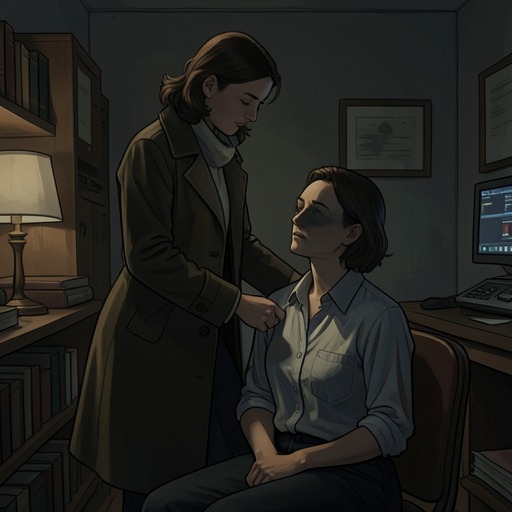
Father Juan presents the Church’s condemnation of suicide alongside its condemnation of abortion and euthanasia. In his account, each is a wrongful use of a body that belongs to God, and suicide is therefore not an individual decision but a transgression against divine ownership. He urges Elena to pray for Rita and accept the Christian judgment of her death. Elena rejects this response: she wants an earthly investigation, not an appeal to the Final Judgement, and points out that her loss of bodily control comes from Parkinson’s disease, not a religious choice.
Their disagreement reveals a tension within the doctrine as it operates in the novel. Father Juan speaks of bodily use as a matter of divine authority; Elena answers from the lived reality of a body she can no longer reliably command. Her illness makes the language of ownership immediate rather than theoretical, and she resists the idea that an institution can define the meaning of her body, her daughter’s death, or her own conduct. The dispute also concerns who may claim interpretive authority: Elena accuses the Church of arrogance when it treats its account of God’s word as final.
Abortion and the Imposition of Motherhood
The doctrine’s consequences appear most forcefully in Rita’s encounter with Isabel, whom she finds vomiting while on her way to seek an abortion. Rita interprets the pregnancy through the Catholic belief that the life inside Isabel must be protected. She insists that Isabel is already a mother and uses religious and moral arguments to dissuade her, despite Isabel’s repeated statements that she does not want to continue the pregnancy and does not consider herself a mother.
Rita brings Isabel to her home rather than leaving her to proceed to the address she carries. The intervention is decisive: Rita applies a doctrine she has learned to another woman’s body, overriding Isabel’s stated wishes. Isabel’s pregnancy is then sustained in circumstances of coercion. She later tells Elena that her husband and another man kept her under close supervision throughout the pregnancy, with nurses present during the day and at night. The novel thus connects opposition to abortion not only with an individual moral belief but also with the wider power relations that limit Isabel’s ability to choose whether to become a parent.
Death, Ritual, and Competing Interpretations
When Rita’s body is found hanging from the bell yoke in the church belfry, Father Juan delays the police response until after the seven o’clock Mass. He regards the service as something that should proceed, even with the body above the congregation, and frames the remaining response as prayer. No bells announce the Mass; rain is audible in the church, while those attending remain unaware of the death overhead. The setting places ritual and the material fact of death in uneasy proximity.
Father Juan later states that Rita took her own life and interprets that act as a condemned misuse of a body belonging to God. Elena refuses to regard the conclusion as sufficient. She keeps returning to the rain because Rita was afraid of going near a church in rainy weather, and asks how her daughter came to be there. Her insistence does not establish another cause of death; it marks the gap between a doctrinal verdict and the unanswered questions that drive her investigation. The Church’s prohibition supplies Father Juan with a moral interpretation, while Elena demands an account of the circumstances.
Uneven Faith and the Novel’s Critique
The novel distinguishes formal doctrine from the characters’ varied religious practice. Rita wears a cross, observes fasts during Lent and on Good Friday, visits seven churches on Good Friday, and follows rules around Mass and Communion. Yet she also skips Mass when it rains, does not confess every sin, and sometimes does not pray. Her religion is presented as a personal arrangement of rituals and beliefs rather than simple conformity to institutional teaching. The contrast matters because Rita’s intervention in Isabel’s pregnancy is firm even as her own practice is selective.
Elena, meanwhile, has concealed her disbelief in the soul and eternal life, in part because her husband Antonio was a practising Catholic and worked at a Catholic school as both porter and theology teacher. She recognizes that Rita grew up between a fervent believer and a mother who only pretended to believe, and sees this divided inheritance reflected in Rita’s ambivalence. Religious words and rituals remain present in Elena’s thoughts even though she rejects their underlying promise of an afterlife.
By placing abortion, suicide, illness, and ritual beside one another, the novel shows how prohibitions can become judgments about who has the right to decide what a body is for. Rita invokes religious belief to determine Isabel’s future; Father Juan uses it to interpret Rita’s death; Elena challenges both the certainty of those judgments and the authority behind them. The framework’s significance lies in that conflict between doctrine and bodily autonomy, and in the harm that can follow when a moral rule is imposed on someone who has not chosen it.